What Is a Home Energy Audit and Why Does It Matter in 2026?
A home energy audit is a systematic process of identifying exactly where your home is wasting energy — and what you can do to fix it. It is not complicated. It does not require expensive equipment or a professional visit, although both are options. What it does require is a methodical approach and the willingness to look honestly at how your home uses electricity, heat, and hot water.
In 2026, with electricity prices across Europe remaining significantly higher than they were five years ago, the financial case for doing a home energy audit has never been stronger. For many homeowners, a thorough audit reveals savings opportunities worth hundreds of euros per year — often from changes that cost nothing at all to implement.
If you have already been wondering why your electricity bill is so high despite trying to cut back, an energy audit is the structured answer to that question. It replaces guesswork with data and turns vague intentions into specific, actionable steps.
The Two Types of Home Energy Audit
Before starting, it helps to understand that there are two approaches to a home energy audit — and both have their place depending on your goals and budget.
DIY Home Energy Audit
A DIY audit uses your electricity bills, a simple energy monitor, and a systematic walkthrough of your home to identify the biggest sources of waste. It costs nothing beyond the time you invest and can reveal the majority of meaningful savings opportunities in most homes. This guide is primarily focused on helping you carry out a thorough DIY audit yourself.
Professional Energy Audit
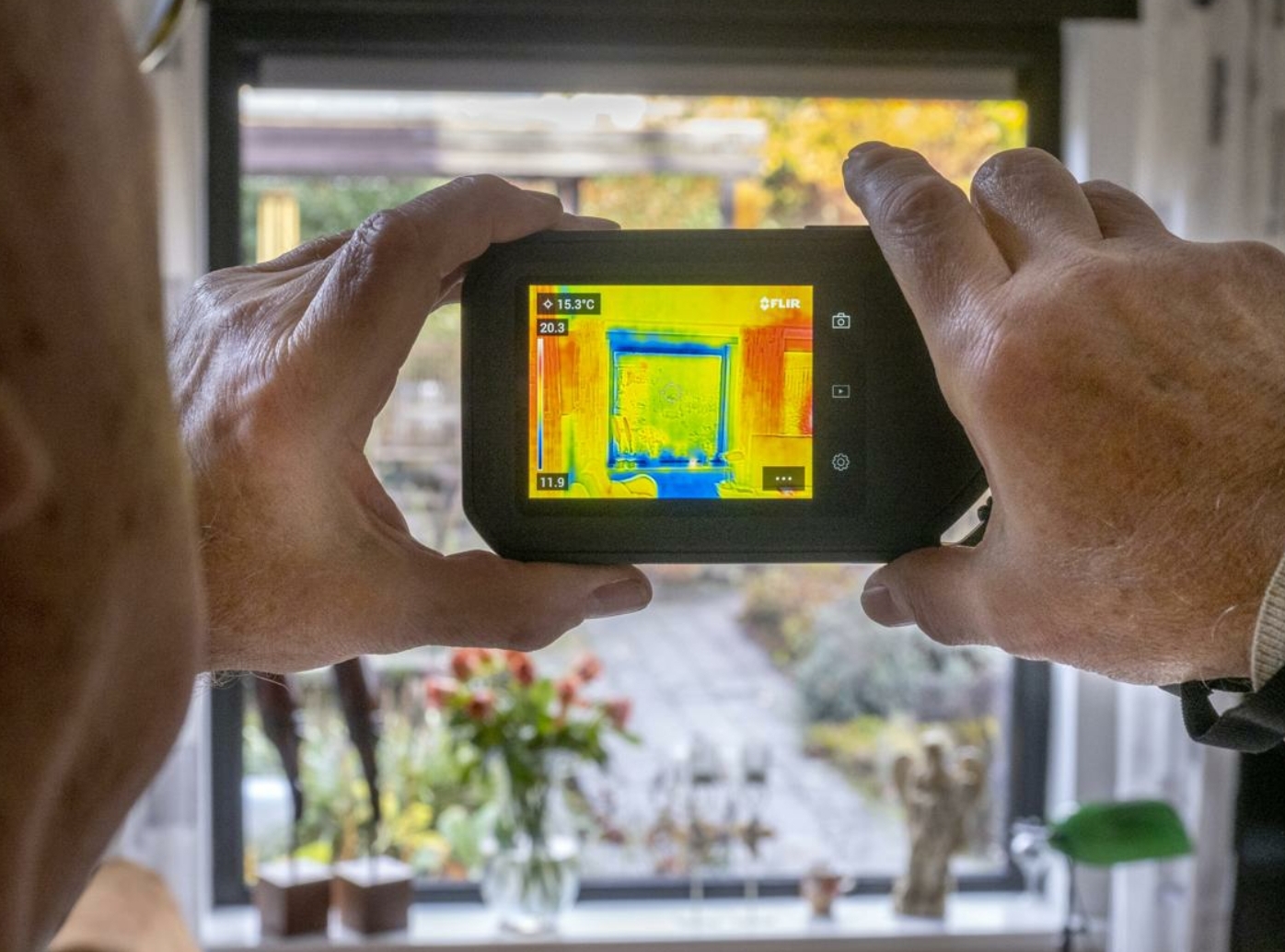
A professional audit brings in a certified energy assessor who uses specialist equipment — thermal imaging cameras, blower door tests, combustion analysis — to identify issues that are invisible to the naked eye, such as insulation gaps, air leaks behind walls, and heating system inefficiencies. Professional audits typically cost between €150 and €500 in most European markets, but they often qualify for partial government subsidy and can identify savings that far exceed their cost. In many European countries, a professional energy audit is a prerequisite for accessing certain home improvement grants.
For most homeowners, starting with a thorough DIY audit makes sense. If that process reveals significant issues — particularly around insulation, heating efficiency, or building fabric — following up with a professional assessment is a worthwhile investment.
Step One: Start With Your Electricity Bills
The first step in any home energy audit is understanding your baseline — how much energy your home currently uses and how that breaks down across the year.
Gather 12 Months of Bills
Collect your electricity bills for the past 12 months. If you have a gas boiler or other gas appliances, gather your gas bills too. Most energy suppliers now provide this data through an online account or app, often with month-by-month breakdowns that make patterns easy to spot.
Look for the following in your billing data:
- Total annual consumption in kWh — your baseline figure for everything that follows
- Monthly variation — a large difference between summer and winter bills often points to heating or cooling inefficiency
- Year-on-year changes — if your consumption has increased without an obvious cause like a new appliance or additional occupant, something has changed in your home
- Standing charges and tariff rates — sometimes switching tariff saves more than reducing consumption
Compare Against European Averages
Once you have your annual consumption figure, it is useful to compare it against typical consumption for a household of your size in your country. Significant variation from the average — particularly if your consumption is higher — points toward specific areas worth investigating in the audit.
- 1-2 person household: 2,000 to 3,000 kWh electricity per year is typical across most of Europe
- 3-4 person household: 3,500 to 5,000 kWh electricity per year
- Larger homes or 5+ occupants: 5,000 to 7,500 kWh per year
If your consumption is well above these ranges without obvious explanation — such as an electric vehicle, heat pump, or home office with high-draw equipment — the audit will help you find out why.
Step Two: Install an Energy Monitor
Before walking through your home room by room, installing a real-time energy monitor gives you something invaluable: the ability to see immediately how much power your home is drawing at any given moment.
How an Energy Monitor Works
A clamp-on energy monitor attaches to the cables in your consumer unit (fuse box) and measures the total electricity flowing into your home in real time. Most connect to a small display unit or smartphone app and show your current power draw in watts or kilowatts, your daily consumption in kWh, and an estimated daily cost.
With a monitor installed, you can walk around your home switching devices off and watching the display drop — identifying exactly how much each appliance draws. This process, sometimes called an appliance walk-around audit, is one of the most effective ways to find hidden energy waste quickly.
What to Look For With a Monitor
- Baseline overnight draw: Check your monitor at 2am or 3am when everything should be off. If your home is still drawing 200W or more, significant standby consumption is happening. This is wasted electricity 24 hours a day, 365 days a year.
- Unexpectedly high draws: Switch on each major appliance individually and note the wattage. Old electric heaters, tumble dryers, and immersion heaters are common surprises.
- Vampire loads: Some devices draw power continuously even when apparently switched off — televisions on standby, gaming consoles, broadband routers, phone chargers left plugged in. The individual draws are small, but their constant 24-hour nature makes them significant over a year.
The best energy-saving devices for European homes include smart plugs with energy monitoring, which let you track individual appliance consumption without needing to measure each one manually.
Step Three: Audit Your Appliances
Appliances account for a significant share of most home’s electricity consumption — often 30 to 40 percent of total use. An appliance audit identifies which ones are performing efficiently and which ones are costing more than they should.
High-Draw Appliances to Check First
Focus your appliance audit on the items that use the most energy. These are the places where waste is most financially significant:
- Electric oven and hob: A typical electric oven draws 2,000 to 2,200W. Using it unnecessarily or leaving it on longer than needed wastes significant energy.
- Tumble dryer: One of the highest-draw household appliances, typically 2,000 to 3,000W per cycle. Air drying instead of tumble drying for even half of your laundry makes a noticeable difference.
- Electric shower: Draws 8,000 to 10,500W while running. A three-minute reduction in daily shower time saves a meaningful amount over a year.
- Washing machine: The heating element is the biggest draw — washing at 30°C instead of 60°C uses approximately 40 percent less electricity for the same load.
- Dishwasher: Running full loads only and using the eco cycle reduces consumption significantly without affecting cleaning performance.
- Fridge and freezer: Run 24 hours a day, 365 days a year. An old, inefficient fridge or freezer can cost three to four times more to run than a modern A-rated equivalent.
Check Energy Labels and Ages
The EU energy label on appliances runs from G (least efficient) to A (most efficient). In 2026, the label has been rescaled to be more demanding — an appliance that was rated A+++ under the old system may now be rated C or D under the new one. If you have appliances more than 10 years old, checking their current energy rating against modern equivalents often reveals a strong financial case for replacement.
Our complete guide on energy-saving appliances for the home covers exactly which replacements deliver the strongest return on investment in 2026.
Standby and Phantom Loads
Make a list of every device in your home that has a standby mode, a clock display, or remains plugged in when not in use. Common culprits include:
- Televisions and set-top boxes
- Gaming consoles
- Desktop computers and monitors
- Microwave ovens with digital clocks
- Phone and tablet chargers left plugged in
- Smart speakers and home hubs
- Broadband routers and switches
Fitting smart plugs with scheduling to devices that do not need to be on overnight eliminates standby waste automatically without requiring any behaviour change.
Step Four: Audit Your Lighting
Lighting is one of the easiest and cheapest areas to improve in any home, and it is often where the quickest wins in an energy audit are found.
Identify Non-LED Bulbs
Walk through every room and identify any bulbs that are not LED. Halogen bulbs — still common in many European homes, particularly in recessed ceiling fittings — use four to five times more electricity than equivalent LED replacements and generate significant heat in the process. Replacing a 50W halogen with a 7W LED saves 43W every hour the light is on.
In a home with 20 halogen bulbs that are used for an average of four hours per day, switching to LED saves approximately 1,250 kWh per year. At typical European electricity prices in 2026, that is a saving of €300 to €500 annually from bulb replacements that typically cost €2 to €5 each.
Check for Lights Left On in Empty Rooms
Note how often lights are left on in rooms that are unoccupied. This is a behavioural waste that costs money without providing any benefit. Motion-sensor light switches in hallways, bathrooms, and utility rooms automate the solution — the light turns off automatically when no one is present, without requiring anyone to remember to switch it off.
Outdoor and Security Lighting
Outdoor lights left on all night are a common hidden drain. Replacing always-on outdoor lights with motion-sensor or dusk-to-dawn LED fittings reduces their running time from eight or more hours per night to a few minutes, cutting their annual electricity cost dramatically.
Step Five: Audit Your Heating and Hot Water
Heating is the largest single energy use in most European homes — typically accounting for 50 to 70 percent of total energy consumption when gas and electricity are combined. Even small improvements in heating efficiency have a large financial impact.
Check Your Thermostat Settings
The single most impactful thermostat change most homeowners can make is reducing the set temperature by one or two degrees. Every degree reduction in thermostat setting saves approximately 6 to 8 percent on heating costs. A home heated to 22°C that is turned down to 20°C saves roughly 12 to 16 percent on its heating bill.
If you are still using a basic programmable thermostat — or worse, a manual one — upgrading to a smart thermostat pays back its cost in most European homes within one to two years. Smart thermostats save money by learning your household’s patterns and automatically reducing heating when rooms are unoccupied, rather than running a fixed schedule regardless of whether anyone is home.
Check Radiator Thermostatic Valves
In homes with central heating radiators, thermostatic radiator valves (TRVs) allow you to set different temperatures in different rooms and reduce heating in rooms that are rarely used. If your radiators have fixed valves or old TRVs that no longer function accurately, replacing them with modern adjustable TRVs is a low-cost improvement that meaningfully reduces heating waste.
Hot Water Temperature and Scheduling
Hot water cylinders are often set higher than necessary. A temperature of 60°C is required for Legionella prevention, but some cylinders are set to 70°C or above, which wastes energy heating water beyond what is needed. Check your cylinder thermostat and reduce it to 60°C if it is set higher.
Also check when your hot water is being heated. If your cylinder is heating water overnight when your household does not use hot water until morning, scheduling it to heat in the early morning instead reduces standing heat loss from the cylinder.
Boiler Efficiency Check
If your home has a gas or oil boiler, its efficiency rating has a direct impact on how much fuel it uses to deliver the same amount of heat. Modern condensing boilers operate at 90 to 95 percent efficiency. An older non-condensing boiler may operate at 70 to 80 percent efficiency — meaning 20 to 30 percent of the fuel you pay for is wasted.
If your boiler is more than 15 years old, getting a boiler efficiency assessment is a worthwhile addition to your energy audit. The potential saving from replacement is significant — and in many European countries, grants are available to support the transition to more efficient heating systems.
Step Six: Check Insulation and Draughts
No matter how efficient your heating system is, poorly insulated walls, floors, and roofs mean the heat you generate escapes faster than it should — and you pay to heat the outside air rather than your living space.
Loft and Roof Insulation
Heat rises, which makes loft insulation one of the highest-impact improvements in any poorly insulated home. The recommended insulation depth for loft insulation in most European climates is 270mm to 300mm of mineral wool or equivalent. If your loft insulation is less than 100mm deep — or if your home has no loft insulation at all — topping it up or installing it for the first time is typically one of the most cost-effective energy improvements available.
Wall Insulation
In homes with cavity walls (two layers of brick with a gap between them), cavity wall insulation can be injected into the gap with minimal disruption and at relatively low cost. Solid-walled homes — common in older European housing stock — are more expensive to insulate, either externally (cladding the outside of the building) or internally (dry-lining the inside walls), but the energy saving is significant in homes that have never been insulated.
Draught Proofing
Gaps around doors, windows, letterboxes, and floorboards allow cold air in and warm air out. Draught proofing is one of the cheapest energy improvements available — draught-excluding strips for doors and windows cost a few euros per fitting and can make a noticeable difference to both comfort and heating bills in older homes.
A simple test on a cold, windy day is to hold your hand near door frames, window edges, and skirting boards. If you can feel cold air movement, there is a draught worth addressing.
Step Seven: Review Your Energy Tariff and Smart Technology Options
Even after optimising how your home uses energy, the tariff you are on determines how much you pay for what you use. An energy audit is not complete without reviewing whether your current tariff is working in your favour.
Fixed vs Variable Tariffs
Energy markets across Europe have been volatile in recent years. In 2026, the right tariff choice depends on your country’s market conditions. Fixed tariffs provide price certainty for a set period. Variable tariffs track wholesale prices, which can work in your favour when prices fall. Comparing available tariffs through your national price comparison service at least once a year is a simple step that can save significant money without changing anything about how you use energy.
Time-of-Use Tariffs
If your energy supplier offers a time-of-use tariff — where electricity is cheaper during off-peak hours, typically overnight — shifting flexible loads to those periods reduces your bill without reducing your consumption. Dishwashers, washing machines, and EV charging are all good candidates for off-peak scheduling.
A smart home energy management system automates this tariff optimisation entirely, shifting your flexible loads to cheap hours without requiring you to remember or manually schedule anything.
Smart Meters
If your energy supplier offers a smart meter and you do not yet have one, requesting an installation is worthwhile. Smart meters provide accurate billing, eliminate estimated bills, and give you access to consumption data that supports all the monitoring steps in this audit.
Prioritising Your Findings: Where to Act First
A thorough home energy audit typically reveals more opportunities than most homeowners can act on all at once. Prioritising which changes to make first — based on their cost, payback period, and impact — makes the process manageable and ensures you capture the biggest savings earliest.
No-Cost Changes: Do These Immediately
- Reduce thermostat temperature by 1 to 2 degrees
- Switch appliances fully off rather than leaving on standby
- Run dishwasher and washing machine only when full
- Wash laundry at 30°C instead of 60°C
- Reduce shower time by 2 to 3 minutes
- Switch off lights in empty rooms
- Check hot water cylinder thermostat setting
Low-Cost Changes: Do These Within a Month
- Replace remaining halogen bulbs with LEDs
- Fit draught-excluding strips to external doors
- Add smart plugs to standby devices
- Install motion sensors in hallways and bathrooms
- Check and top up loft insulation if below 270mm
Higher-Investment Changes: Plan and Budget For These
- Replace old inefficient appliances with A-rated equivalents
- Install a smart thermostat
- Add cavity wall insulation if applicable
- Consider solar panels to generate your own electricity
- Explore heat pump options if your boiler is old and inefficient
For the higher-investment changes, check what grants and incentives are currently available in your country before budgeting. Most European governments offer meaningful financial support for home energy improvements in 2026, which can significantly reduce the net cost of measures like insulation, heat pumps, and solar panels.
Tracking Your Progress After the Audit
An energy audit is most valuable when it leads to measurable improvement. Tracking your consumption after implementing changes confirms that what you have done is working — and motivates further action.
Set a Baseline and Monitor Monthly
Use your pre-audit annual consumption as your baseline. After implementing your first round of changes, compare your monthly consumption against the same month in the previous year. Adjust for any obvious external factors — an unusually cold winter, an additional occupant, a new appliance — and calculate your percentage reduction.
Most homeowners who complete a thorough audit and implement the no-cost and low-cost changes find their consumption drops by 15 to 25 percent within the first three months. Simple consistent changes to how you use energy at home compound over time and produce savings that appear clearly in your annual bill.
Repeat the Audit Annually
An energy audit is not a one-time exercise. Repeating it annually — or after any significant change to your home or household — ensures you stay on top of new waste sources and capture the benefit of new technology or tariff options as they become available.
FAQ — People Also Ask About Home Energy Audits
How much can a home energy audit save on bills in Europe?
The savings depend on your starting point and how much waste your audit reveals. Homes that have never been audited typically find enough savings opportunities to reduce their annual energy bill by 20 to 35 percent through a combination of no-cost behaviour changes, low-cost improvements like LED lighting and draught proofing, and targeted appliance upgrades. In absolute terms, this can represent €300 to €800 per year for a typical European family home at 2026 electricity prices.
Do I need a professional to do a home energy audit?
No — a DIY audit using your bills, a simple energy monitor, and a systematic room-by-room walkthrough identifies the majority of meaningful savings opportunities in most homes. A professional audit adds value when you want to assess building fabric issues like insulation gaps and air leakage that require specialist equipment to measure accurately, or when you are applying for government grants that require a certified assessment.
What is the most energy-wasteful thing in a typical home?
Heating is the largest single energy use in most European homes, but it varies by home type and heating fuel. For electricity specifically, the biggest consumers are typically electric showers, tumble dryers, electric ovens, and old refrigerators and freezers running continuously. Standby consumption across multiple devices can also add up to a surprising total when measured over a full year.
How long does a DIY home energy audit take?
A thorough DIY audit — including reviewing 12 months of bills, installing and using an energy monitor for a week, walking through each room systematically, and checking heating, insulation, and lighting — typically takes three to five hours spread across one to two weeks. The monitoring phase benefits from at least a week of data to capture your household’s full range of usage patterns.
Are there government grants available for home energy improvements in Europe in 2026?
Yes — most European countries offer meaningful financial support for home energy improvements in 2026, including grants for insulation, smart thermostats, heat pumps, and solar panels. Available programmes vary by country and are updated regularly. Check your national energy agency website or speak to a certified installer in your area who will be familiar with current incentives in your market.
Your Home Energy Audit Is the Starting Point — Not the End
The real value of a home energy audit is not the audit itself — it is what you do with what you find. Every item on your findings list represents money you are currently spending unnecessarily, and every action you take converts that waste into saving.
Start with the no-cost changes today. Add the low-cost improvements over the next few weeks. Plan the higher-investment changes around available grants and your budget timeline. Then track your consumption monthly and watch your bills fall.
If you want to go further and build a genuinely energy-efficient home, our guides on how to build a zero electricity bill home with solar panels and smart home energy management systems show you the next steps beyond the audit — toward a home that generates its own clean energy and manages it automatically.
And if you want a quick list of the most impactful changes to start with right now, our guide to 10 easy ways to cut your electricity bill this month covers the fastest wins in detail.